
Last updated October 17, 2026
 Metal roofing
 Architectural shingles
 Tile roofing
 GAF
GAF Owens Corning
 Flat & low-slope
Free roof inspection with deck photos before we talk money - GAF and Owens Corning certified installation
Seasonal Roofing Care for West Covina: Year-Round Homeowner’s Guide
Most seasonal roofing guides tell West Covina homeowners to “winterize” in November. By November, the Santa Ana winds have already been stressing your flashings for two months, and the first rainstorm is about two weeks out. The real prep window for West Covina is September. Here’s the truth: West Covina doesn’t have four traditional seasons. It has two roofing seasons: a long dry-heat season that bakes and degrades materials from May through October, and a short but intense rain season from November through April that punishes every gap the heat season created. This guide is organized around that two-season reality, not a calendar borrowed from the Pacific Northwest. For The Complete Guide to Roofing in West Covina, see our full resource. By the time you finish reading, you’ll know exactly what to inspect, when to do it, and what it should cost in West Covina.
Styles & brands we work with
Quick Answer
Seasonal roof care in West Covina comes down to two windows: September (before Santa Ana winds and winter rain) and March (after the last storm, before summer heat). The single highest-leverage month is September: clear gutters, inspect flashing, check for lifted shingles, and seal any exposed nail heads. Most standard repairs in West Covina run $350 – $850, and a professional roof inspection typically costs between $150 and $300. If you do nothing else, do the September checklist and check your roof after every major Santa Ana wind event.
Table of Contents
- Why West Covina’s Climate Demands a Different Roofing Calendar
- September: The Highest-Leverage Month in West Covina Roofing
- UV Degradation: Why West-Facing Slopes Fail First in the San Gabriel Valley
- The 48 Hours After a Santa Ana Wind Event: A 15-Minute Ground-Level Check
- Why Gutters Matter More Than You Think in West Covina’s Short Rainy Season
- Rain Season: What to Do During and After West Covina’s Winter Storms
- Month-by-Month Quick-Reference Card for West Covina Roofs
- Common Mistakes to Avoid
- When to Call a Professional
- Frequently Asked Questions
- The Bottom Line
Why West Covina’s Climate Demands a Different Roofing Calendar
West Covina sits in the San Gabriel Valley, where summer temperatures routinely hit the mid-90s and occasionally push past 100°F. Your roof surface gets hotter than that. On a 95°F day, asphalt shingles on a west-facing slope in West Covina can reach 150°F or more. That heat does not just sit there. It accelerates the breakdown of the asphalt compounds that hold shingles together, dries out sealants, and makes materials brittle. Then, when the rain season arrives, those brittle materials are asked to do the heaviest work of the year.
That’s the core problem with applying a four-season roofing calendar from other parts of the country to West Covina. In the Midwest, the freeze-thaw cycle is the enemy. In the Pacific Northwest, it is constant moisture. Here, it is a thermal stress cycle: months of heat expansion followed by sudden rain contraction. The expansion and contraction at joints, around flashings, and along eaves is what causes most roof leaks in the San Gabriel Valley. We see this every year in West Covina: roofs that looked fine in October are leaking by January, not because of the rain itself, but because the rain exposed what the heat already damaged.
What does that mean for a homeowner? It means your roof needs a pre-heat inspection in March or April and a pre-rain inspection in September. Two checkpoints a year, each doing a different job. The spring inspection focuses on UV damage, cracked sealant, and lifted shingles. The fall inspection focuses on wind resistance, debris clearance, and water intrusion points. If you only do one inspection a year, make it September. The stakes are higher: a failed roof in summer is an inconvenience. A failed roof in a January downpour is active damage to your ceilings, walls, and insulation.
September: The Highest-Leverage Month in West Covina Roofing
September is when West Covina transitions from the dry-heat season into the wind and rain season. The Santa Ana winds typically begin in October, and the first significant rain usually arrives by late November or early December. That gives you roughly eight to ten weeks from September 1 to get your roof ready. If you wait until the first storm warning, you are competing with every other homeowner in the San Gabriel Valley for the same roofing crews. In September, you have scheduling flexibility. In November, you are waiting in line.
Here is a September action list we recommend for West Covina homeowners. Most of these items take under an hour, and all of them can be done from a ladder or the ground. If you are not comfortable climbing a ladder, a roofing professional can handle all of them in a single visit.
- Clear gutters and downspouts. By September, the summer winds have already deposited a season’s worth of leaves, twigs, and seed pods into your gutters. Eucalyptus, jacaranda, and Chinese elm are some of the heaviest debris producers in West Covina, and all three are common in neighborhoods from the hills down to the flatlands. Clogged gutters back water up under the roofline.
- Inspect flashing around chimneys, vents, and skylights. Flashing is the metal strip material that seals the joints where roof surfaces meet something else: a chimney, a vent pipe, a skylight edge. Check for lifting, cracking, or missing sections, especially at the corners where leaks most often start in West Covina.
- Look for lifted, cracked, or missing shingles. After a summer of heat, the sealant holding shingle tabs together is often starting to fail. A shingle that is not fully sealed will lift in the first Santa Ana wind event. If you see any shingle edges that catch a fingernail or appear to be standing up slightly, address them now.
- Seal any exposed nail heads. Nails on roof surfaces, flashings, and ridge caps are eventually exposed by sun and heat. Exposed nails are a water intrusion point. A dab of roofing sealant covers them for another season.
- Trim back overhanging branches. Branches that scrape against shingles in wind storms are doing slow, continuous damage. Cut them back before Santa Ana season so they cannot scrape or snap onto your roof.
- Check the attic for dark stains or daylight. Go into your attic with a flashlight and look at the underside of the roof deck. Dark stains indicate past moisture intrusion. Pinholes of daylight indicate a penetration in the roofing surface that will leak when rain arrives.
We have seen a lot of West Covina roofs go through this September checklist and make it through the entire rain season without a single issue. The roofs that skip it? Those are the phone calls we get the morning after the first heavy storm. The difference is not luck. It’s September.
UV Degradation: Why West-Facing Slopes Fail First in the San Gabriel Valley
Here is something most seasonal roofing guides never mention, and it matters enormously in West Covina: not all slopes on your roof degrade at the same rate. The slope that faces west or southwest gets hours of direct afternoon sun, the hottest and most intense UV exposure of the day. A north-facing slope gets far less direct sun and often shows significantly less material degradation over the same period. We regularly see roofs in West Covina where the west-facing slope is visibly more brittle, more faded, and more granule-shedding than the north-facing slope on the same house. The difference in remaining service life can be five years or more.
Why does this happen? Asphalt shingles contain oils that keep the material flexible. UV radiation breaks down those oils over time. The more sun a slope receives, the faster the oils degrade, and the faster the shingles become brittle, curl, and lose their granular surface. On a west-facing slope in West Covina, this process runs measurably faster. We recommend checking the west and southwest slopes of your roof more frequently than other sides, ideally twice a year: once in March after the winter rain season, and once in September before the next rain season begins. Look for shingles that have a shiny, smooth surface where granules used to be, curling at the corners, or cracking that follows a consistent pattern. When the granule surface is gone, the underlying asphalt is exposed to UV, and the shingle’s lifespan drops quickly.
One specific thing to watch for on west-facing slopes in West Covina: the area around the eaves. The eaves on west-facing slopes get the longest sun exposure and are also where water sheets off during rain. That combination makes the eaves the most common first-failure point on a sun-degraded roof. If you see granule loss starting at the eaves and creeping upward, that is a sign the slope is nearing the end of its practical life. When that slope gets replaced, the rest of the roof may still have years of service left, but mixing old and new materials on adjacent slopes means managing color and material differences. A good roofer will talk you through whether a partial replacement makes sense or whether replacing the whole field is the better call in the long run.
The 48 Hours After a Santa Ana Wind Event: A 15-Minute Ground-Level Check
Santa Ana winds are part of life in West Covina. They arrive in the fall and winter months, with gusts that can reach 40 to 60 mph or more in exposed areas of the San Gabriel Valley. Every Santa Ana event is a stress test for your roof, and the damage is often invisible from ground level. What we tell homeowners in West Covina is this: after any significant wind event, spend 15 minutes doing a ground-level check. You are not looking for catastrophic damage, which is obvious. You are looking for the small signs that indicate something has shifted.
Here is the 48-hour ground-level check, step by step:
- Walk the perimeter of your home with your eyes on the roof edges. Look for shingles that are no longer lying flat. A lifted shingle will catch the light differently. You may see a tab or corner standing up slightly. That is the early warning sign of a shingle about to tear off in the next wind event.
- Look for shingle debris on the ground or in the yard. After a major wind event in West Covina, pieces of torn shingle often end up in the lawn, in planter beds, or on the driveway. If you find shingle fragments, the source is somewhere on your roof. You need to find it.
- Check around roof penetrations. Look at the areas around your chimney, plumbing vents, and any roof-mounted equipment. Wind often lifts flashing that was already loose or partially secured. A lifted flashing creates a direct path for rain into your roof structure.
- Look at the ridge line. The ridge is the highest point of your roof, where two slopes meet. Ridge cap shingles are often the first component to tear away in high winds. Look for gaps, missing caps, or ridge pieces that appear tilted.
- Take photos of anything that looks even slightly off. Having a before photo makes it much easier to assess whether a condition is changing. It also helps any roofer you later contact understand exactly what you are seeing.
This check takes longer to describe than to do. The point is not to diagnose every issue. The point is to catch visible changes early, before the next storm turns a minor issue into a water intrusion event. If you find anything that concerns you, call a roofer. The sooner a lifted shingle is resealed or replaced, the cheaper the repair.
Why Gutters Matter More Than You Think in West Covina’s Short Rainy Season
Gutters are the unsung heroes of the West Covina roof system, and they fail quietly. Here is the dynamic: West Covina gets most of its annual rainfall in just a few weeks between December and March. That means gutters sit dry and accumulating debris for eight or nine months of the year. Then, when the rain arrives, they are expected to move thousands of gallons of water through a channel that may be half full of decomposed leaf matter, seed pods, and dirt. When they cannot, water backs up over the gutter edge and runs down the fascia board. Over a season or two, that fascia board rots. Once the fascia rots, the gutter fasteners lose their grip, the gutter pulls away from the house, and the entire drainage system on that roofline stops functioning.
And West Covina has a specific debris problem: Eucalyptus and jacaranda trees. Eucalyptus trees shed bark strips, leaves, and seed capsules all year, but the highest volume lands in late summer and fall. Jacarandas drop a load of fine leaves and seed pods right before the rain season starts. Both are abundant in older West Covina neighborhoods, and both produce debris that clogs gutters faster than almost anything else in the San Gabriel Valley. A gutter system that was clean in August can be completely blocked by November, purely from tree litter. If you have either tree species on or near your property, check your gutters more often than the standard twice-a-year recommendation: think every two months from September through January.
We also advise West Covina homeowners to think about gutter guards with realistic expectations. Gutter guards reduce debris accumulation, but they do not eliminate the need for maintenance, especially with fine jacaranda leaves that can slip through many guard designs. The most reliable system is a simple one: scheduled gutter cleaning before the rain season, a mid-season check after the first heavy rain, and a visual inspection after any significant wind event. It is unglamorous, it is cheap, and it prevents rot that costs thousands to repair.
Rain Season: What to Do During and After West Covina’s Winter Storms
Once the rain season starts in West Covina, the approach shifts. You are no longer preparing a roof. You are monitoring it and responding to what the rain reveals. The first heavy rain of the season is the most informative event of the year. It will tell you, within 24 hours, whether your September preparation was sufficient. If you did the September checklist and your roof still leaks in the first storm, the leak was pre-existing and gradual; it just took the first sustained rain to reveal itself. If your roof is fine through the first two or three storms and then begins leaking, that indicates a progressive failure: something is degrading in real time and will continue to get worse until it is repaired.
During any heavy rain in West Covina, there is one indoor check we recommend doing once per storm cycle: go into the attic or uppermost rooms and look up. Check the underside of the roof deck around skylights, chimneys, and any roof penetrations. In the dark, use a flashlight and look for reflective spots: water on the underside of sheathing reflects light differently than dry wood. Also check for damp insulation, stained drywall, or water streaks on rafters. The earlier you catch water intrusion, the less expensive the fix. A small leak you catch in January becomes a restoration project if it goes undetected until March.
After the rain season ends, usually in late March or early April in West Covina, do a post-season check. Clear any remaining debris from gutters, check that downspouts are still securely attached, and inspect the areas around your eaves and valleys for granule wash-off. Valleys, the V-shaped channels where two roof slopes meet, concentrate water flow during rain and are a common location for granule loss to show first. If you see significant granule accumulation in gutters or at downspout outlets, that is a sign your shingles are nearing the end of their serviceable life. At that point, the smart move is to have a professional inspection and think through your options for a replacement, which is a much bigger decision than a seasonal repair.
If your roof does leak during the rain season, the leak will not fix itself when the rain stops. It will dry out temporarily, then leak again during the next storm, and each cycle does more damage to the roof deck and your insulation. The longer a leak persists in West Covina’s wet-dry cycle, the more surface area is affected. When you see a leak, treat it as an active problem and make the call. For context, a standard flashing or shingle repair in West Covina typically runs $350 to $850, depending on the component and access. A full roof replacement in West Covina is a different scale of investment, and it’s a decision worth planning for rather than making in crisis mode.
Month-by-Month Quick-Reference Card for West Covina Roofs
If you want the shortest possible version of this guide, here it is: one task per month. Do these and you are ahead of 90% of homeowners in West Covina.
- January: During the first heavy rain, check your attic for water stains around chimneys, skylights, and vents. If you find moisture, document it and call a roofer after the storm passes.
- February: After storms, clear any debris that has accumulated against roof edges or in valleys. Check gutters and downspouts for blockages from storm-driven litter.
- March: Post-rain-season inspection. Look for granule wash-off in gutters, lifted shingles, and any areas where water may have pooled. This is the ideal month for a professional annual inspection.
- April: Check all roof penetrations (vents, pipes, chimney flashing) for loose sealant. The dry season is beginning, and now is the cheapest time to fix small issues before they expand in the heat.
- May: Begin monitoring west-facing slopes for granule loss and curling. Early summer UV exposure is when the first visible signs of sun damage appear on these slopes.
- June: Check attic ventilation. Summer heat in a poorly ventilated attic in West Covina can push roof deck temperatures high enough to accelerate shingle degradation from the underside.
- July: Mid-summer check of all sealants and exposed fasteners. Seal any exposed nail heads or screws with roofing sealant.
- August: Trim back any branches that have grown into contact with the roof surface. Clear gutters of summer debris. Watch for signs of granule loss on eaves.
- September: Full pre-rain-season checklist: gutters, flashing, shingle condition, attic inspection, branch trimming, nail sealing. This is the highest-leverage month on the calendar.
- October: Post-Santa-Ana wind check. After the first major wind event, do the 15-minute ground-level check. Look for lifted shingles, loose flashing, and ridge cap damage.
- November: Final pre-rain gutter cleaning. The first significant storm is typically weeks away. Clear gutters and downspouts completely, and verify that downspout extensions direct water away from the foundation.
- December: During the first sustained rain, monitor the attic and ceilings. Address any water intrusion immediately after the storm, while the evidence is still visible.
This is not a heavy maintenance schedule. Most months require less than an hour, and the most involved tasks are things you can do from the ground or a stepladder. The discipline is in the consistency. A roof that is checked twelve times a year fails less often than a roof that is ignored until a leak appears. That is not speculation. It is the pattern we see across hundreds of homes in West Covina and the surrounding San Gabriel Valley.
Common Mistakes to Avoid
- Waiting until the first rain to inspect the roof. By the time rain is falling in West Covina, any damage already present is about to become an active leak. The inspection that matters happens in September, October, and early November, before the first storm.
- Ignoring lifted shingles because “they haven’t blown off yet.” A lifted shingle in November will either tear off in a December Santa Ana event or let water underneath during a January storm. Neither outcome is good. Lifted shingles are a $150 to $350 repair that becomes a $1,000+ ceiling repair when ignored.
- Assuming a north-facing slope is in the same condition as the west-facing slope. They age at different rates. If you only inspect one side of your roof, inspect the west-facing side. In most West Covina homes, it degrades first.
- Cleaning gutters only once a year. With eucalyptus and jacaranda debris loading, once-a-year gutter cleaning in West Covina often means running blocked for weeks. Twice a year is the minimum for most homes; more if you are under heavy tree cover.
- Using silicone caulk from the hardware store to seal roof flashings. Household silicone is not formulated for the thermal movement and UV exposure of a roof surface. It will peel within months. Use a proper roofing sealant, or leave it to a professional.
- Walking on the roof to do inspections without knowing local conditions. West Covina roofs after a summer of heat have brittle shingles. Walking on them in the wrong shoes, or on the wrong areas, causes more damage than it prevents. Ground-level and ladder-based inspections are safer, and professional inspections are often the lowest-cost option when you factor in the damage risk.
- Assuming a roof leak stops being a problem when the rain stops. The moisture that entered your roof during a storm remains in the structure long after. Mold, rot, and insulation damage continue. A leak that appears during one storm and is not addressed will be worse during the next storm, even if it seems “fine” in between.
When to Call a Professional
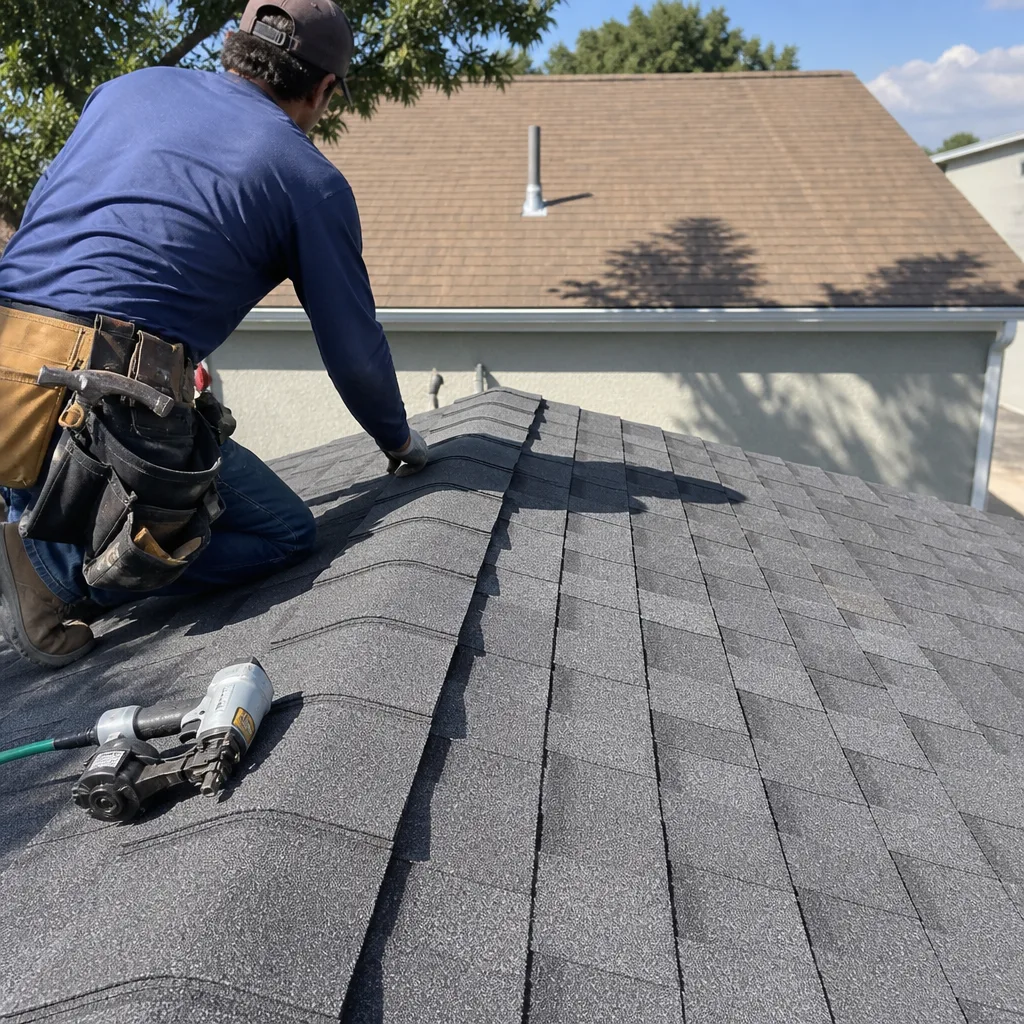
Some roofing tasks are safe and reasonable for a homeowner: ground-level inspections, gutter clearing from a ladder, attic checks, and visual monitoring. Some are not. Roof work itself, including shingle replacement, flashing replacement, and any repair that requires working on the roof surface, is a job for someone with the right equipment and training. The materials are hot, the surfaces are brittle after a West Covina summer, and falls from roofs are one of the most common serious home injuries. If you see a problem during any of the seasonal checks and the fix requires getting onto the roof surface, call a professional. If you are unsure whether something is a problem, call a professional. And if you have a leak during the rain season, call a professional before the next storm arrives. For guidance on choosing the right company, read How to Hire a Roofing Contractor in West Covina: A Step-by-Step Guide.
Crestview Roofing Co West Covina offers free estimates in West Covina. Browse more guides & resources on our blog. We’ll inspect the issue, explain what we found in plain English, and put a written price in front of you before any work starts. Call (831) 777-6412.
Frequently Asked Questions
Twice a year: once in March or April after the rain season, and once in September before the Santa Ana and rain season begins. The September inspection is the more important of the two, because it prepares your roof for the months when most leaks and storm damage occur in West Covina. Call (831) 777-6412 if you’d like a professional inspection scheduled for either window.
Professional roof inspections in West Covina typically cost between $150 and $300, depending on the size and complexity of the roof. Some companies apply that fee as a credit toward any repair work that follows. A thorough inspection that catches a failing flashing in September is far cheaper than the emergency repair in January that the inspection would have prevented.
Most standard roof repairs in West Covina, including flashing replacement, shingle replacement, and sealant work, run $350 to $850. More involved repairs, such as replacing the structure underneath a roof leak or rebuilding a chimney flashing system, can run higher. The best way to know your exact number is to have a roofer look at the specific issue and write you a fixed price before work starts. Not sure whether to tackle it yourself? See our DIY vs Professional Roofing: The West Covina Homeowner’s Decision Guide. At Crestview Roofing Co West Covina, that written price is the number you pay, no exclusions. Call (831) 777-6412 for a free estimate.
No. Homeowner’s insurance covers sudden, catastrophic damage from events like storms, fire, or falling trees, but it does not cover maintenance issues, gradual wear, or neglect. If a roof fails because of twenty years of UV exposure and deferred maintenance, that is an owner responsibility in almost all cases. This is precisely why the seasonal maintenance in this guide matters: it keeps your roof in the category of “storm damage, covered” rather than “deferred maintenance, not covered.” The right question to ask your insurance provider is what specific storm events your policy covers in West Covina, and what deductible would apply to a roof damage claim.
It should not, if you hired the right company. At Crestview Roofing Co West Covina, the written price you receive before work starts is the price on the invoice, period. The only situation where a legitimate roofer should propose a change order is if hidden damage is discovered that was not visible during the original inspection. In that case, you should be shown the condition, given a written price for the additional work, and given the option to proceed or not. You should never be surprised by a higher bill at the end of a job. Call (831) 777-6412 and we’ll walk you through exactly how our pricing process works.
In most cases, once a roofer identifies the source of the leak, the repair itself can be completed in a few hours. The limiting factor during West Covina’s rain season is weather: repairs cannot be done safely during active rain. The key is to have the source identified before or between storms, so the repair can be scheduled the moment the roof surface is dry. This is another reason the September inspection matters. A roof that is checked and sealed in September rarely has rain-season surprises. If yours does, call (831) 777-6412 as soon as you see the first sign of a leak, and we’ll schedule the work during the next clear window.
The Bottom Line
West Covina roofing is a two-season game. The dry-heat season from May through October bakes your materials and opens small gaps. The rain season from November through April exposes every one of those gaps as a leak. The homeowners who avoid expensive surprises are the ones who act in September, clear their gutters, inspect their flashings, reseal exposed nails, and check the west-facing slope that gets the most UV. Then they monitor after Santa Ana wind events, catch issues in the 48-hour window when they are small and cheap, and call a roofer before a leak becomes a restoration project.
If you want a professional’s eyes on your roof this season, Crestview Roofing Co West Covina home is the place to start. We handle roof repair in West Covina, roof replacement in West Covina, and roof installation in West Covina using materials from GAF, CertainTeed, and Owens Corning, among others. We give you a written price before any work starts, photo documentation when the work is done, and a 365-day written guarantee on every repair. Call (831) 777-6412 for a free estimate.
Written by Dylan Pace, Owner at Crestview Roofing Co West Covina, serving West Covina since 2000.
See the difference
 Before
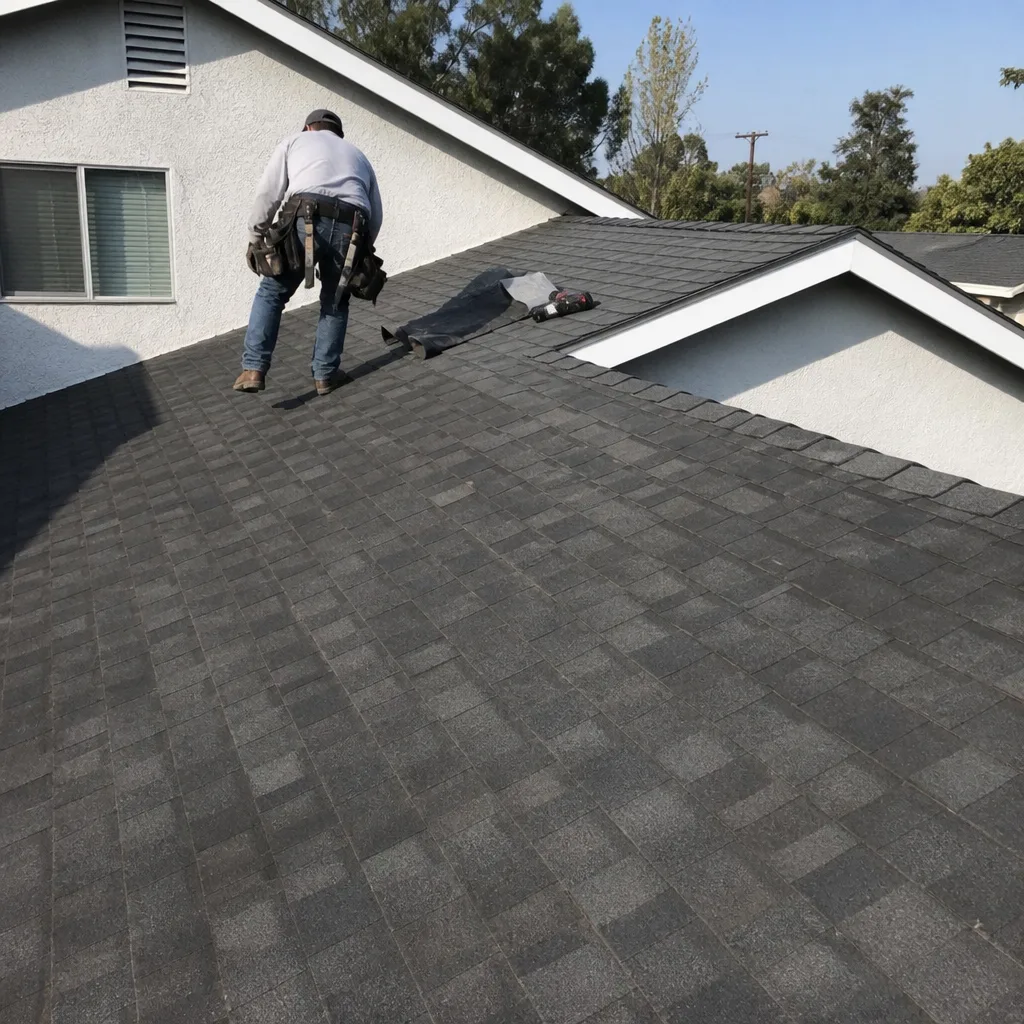 After
After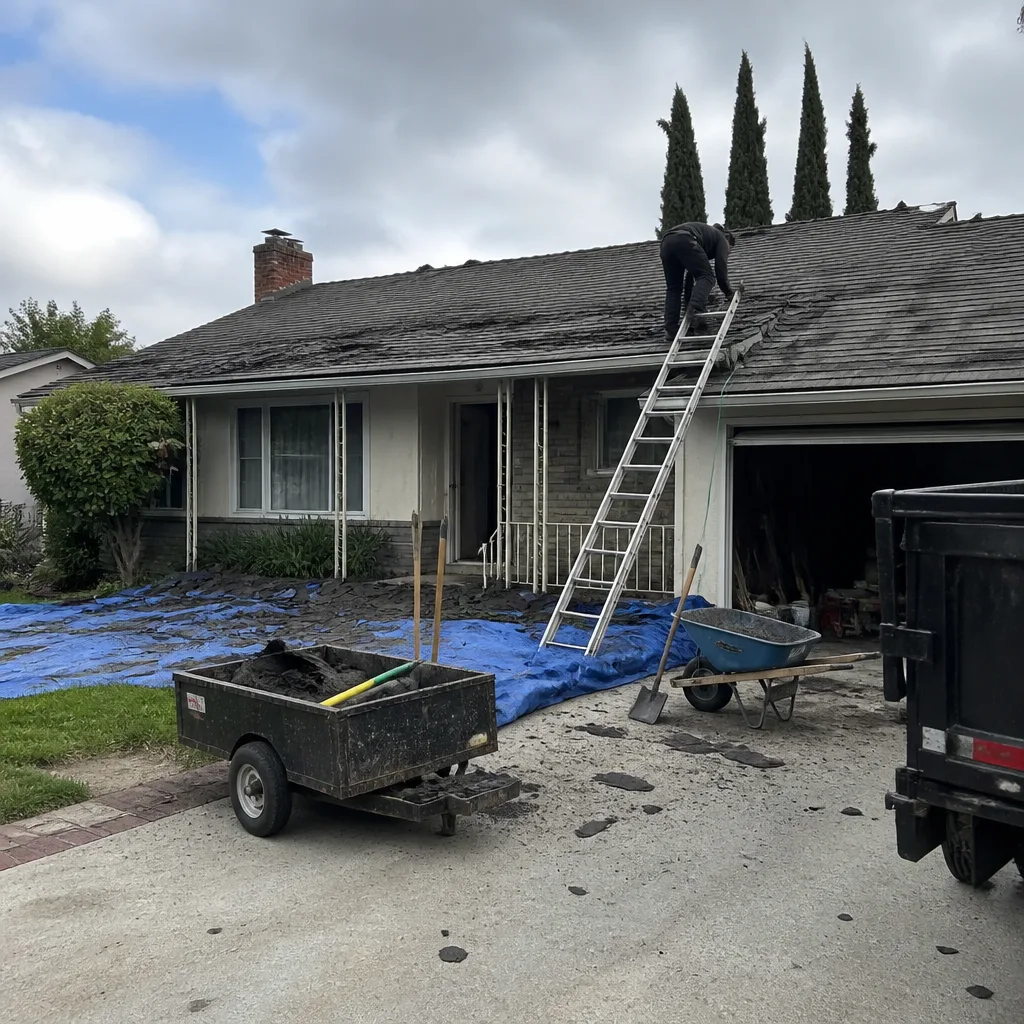 Before
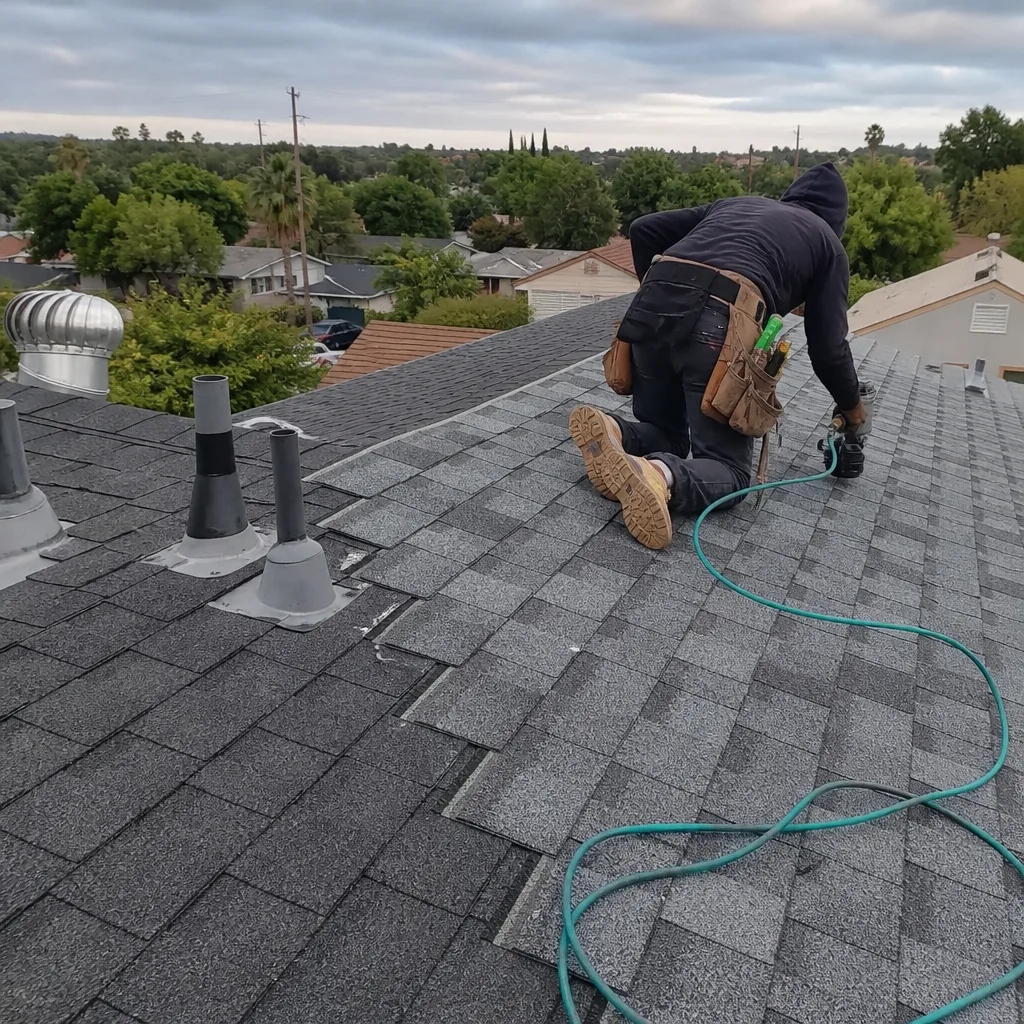 After
After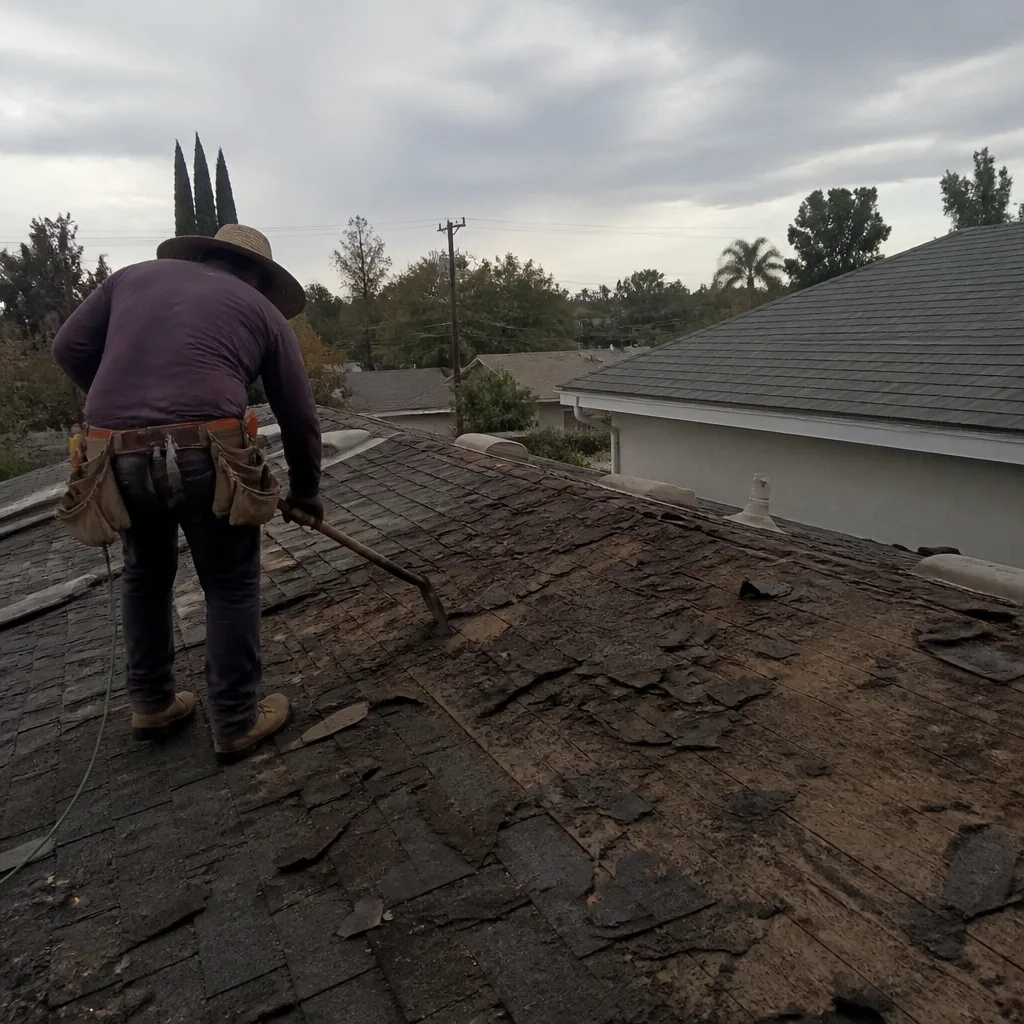 Before
 After
After