
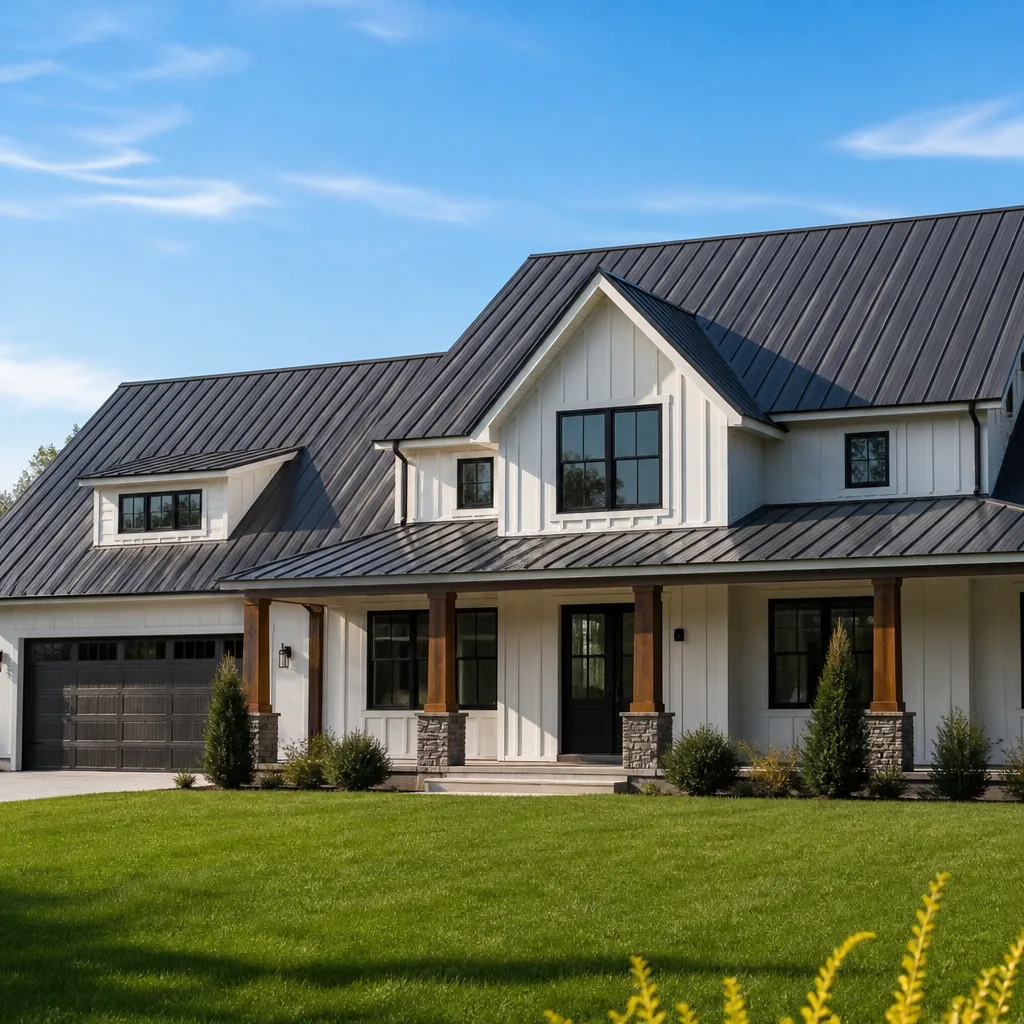
 Metal roofing
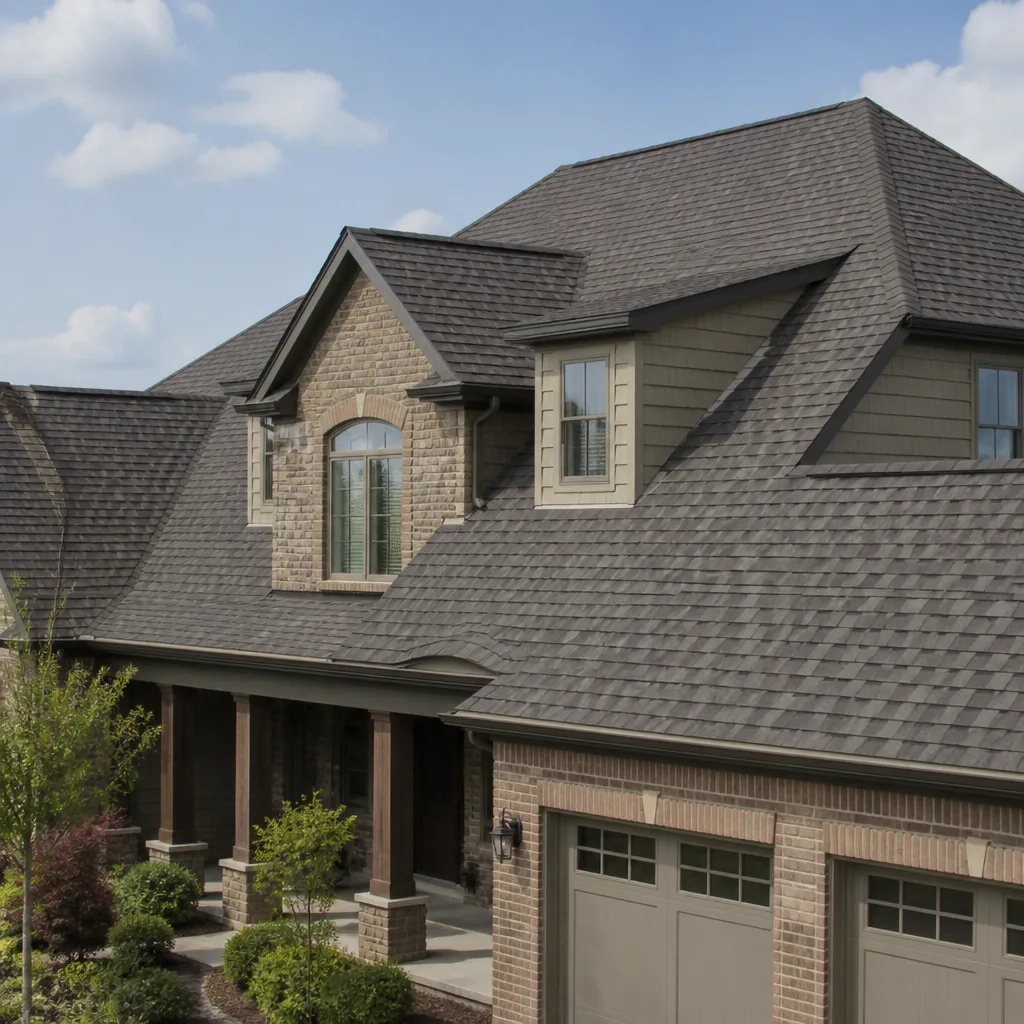 Architectural shingles
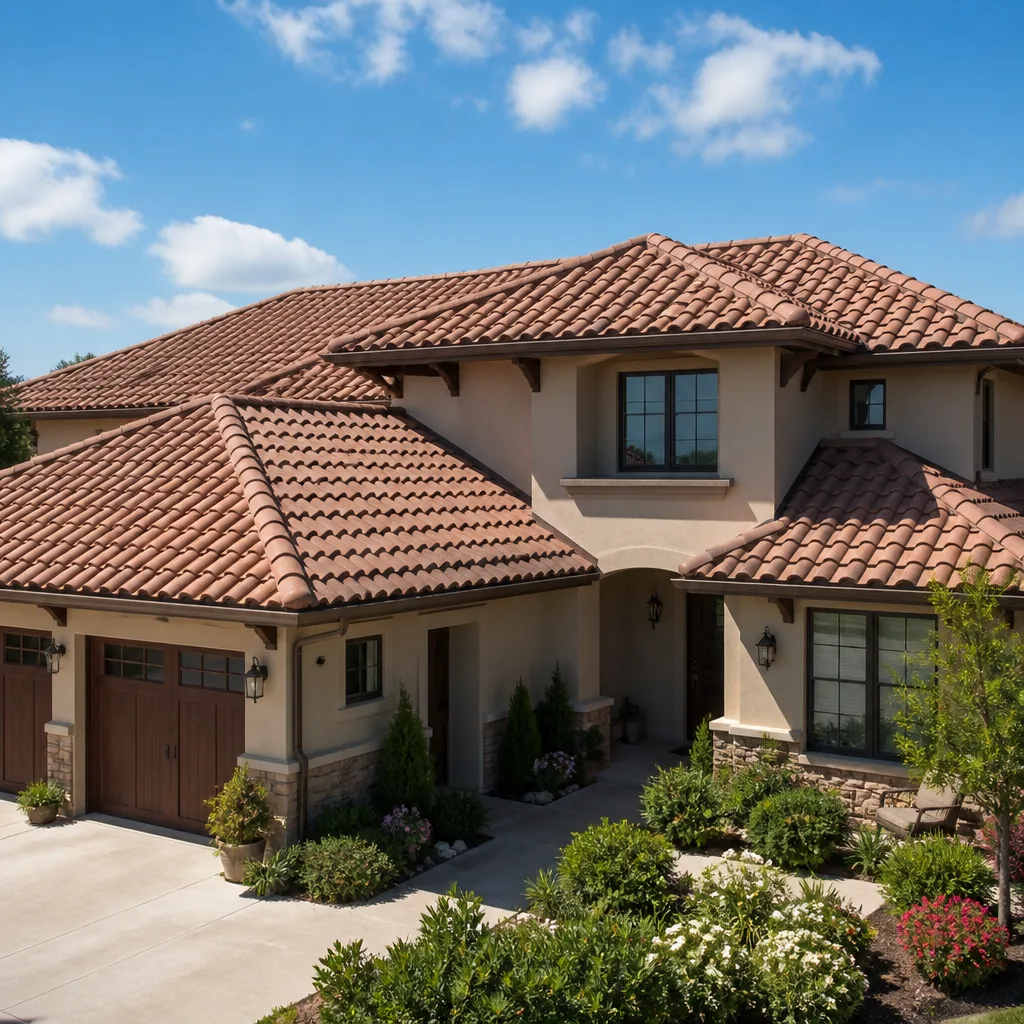 Tile roofing
 GAF
GAF Owens Corning
 Flat & low-slope
Free roof inspection with deck photos before we talk money - GAF and Owens Corning certified installation
Atlas Flashing Replacement: The West Covina Owner’s Guide
Atlas flashing replacement in West Covina typically runs $275 – $650 installed, depending on the flashing type, roof pitch, and how much of the surrounding shingle needs to be lifted and re-sealed. We stock Atlas-compatible flashing on our trucks and complete most replacements the same day we arrive. Most homeowners discover a flashing failure the quiet way: a water stain on the ceiling that shows up weeks after the leak actually started, usually after a Santa Ana wind event or a heavy February rain pushed water sideways under a lifted edge.
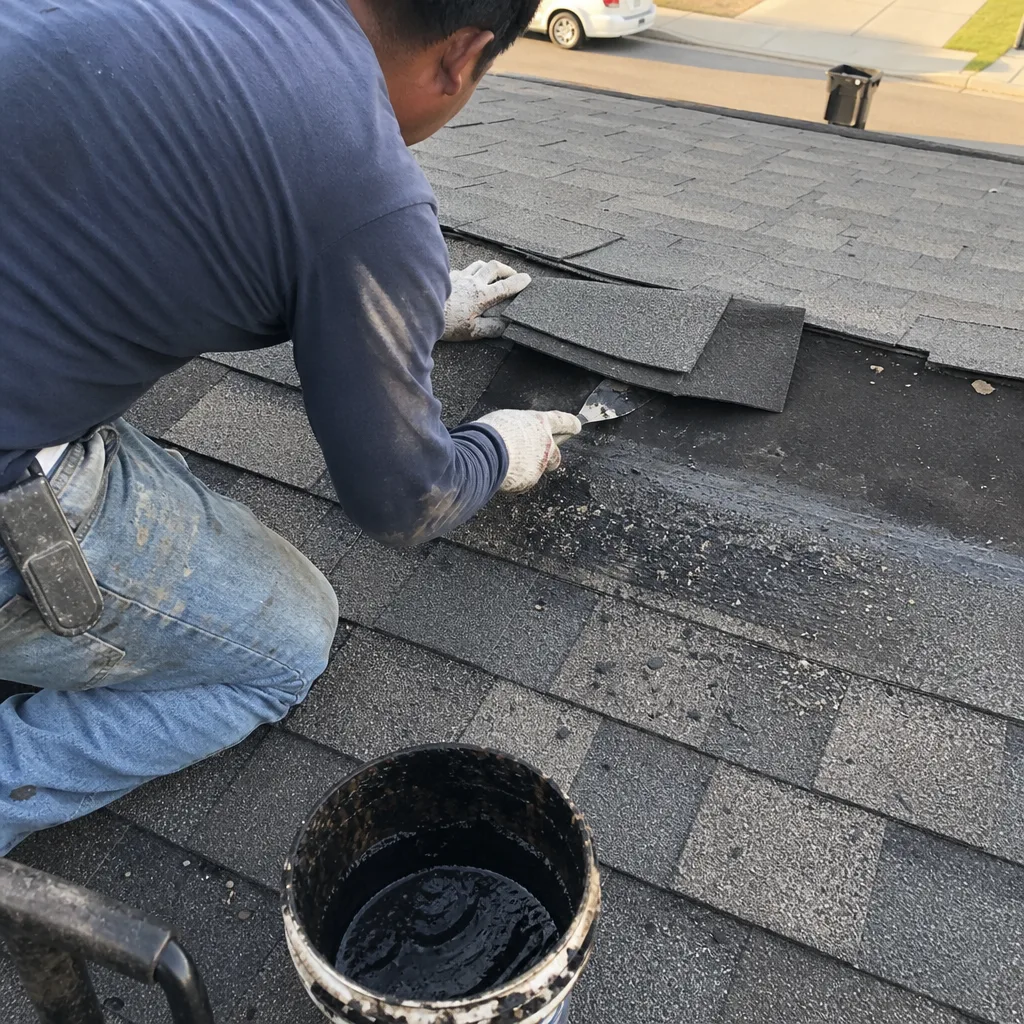
Flashing is the metal work that seals the joints where your roof meets something else: a chimney, a vent pipe, a skylight, a wall, or a valley where two roof planes meet. When it fails, water doesn’t pour in all at once. It creeps, saturates decking, and by the time you see the stain, the repair is bigger than the flashing alone. That’s the honest reality of roofing in West Covina, where summer heat bakes flashing until it expands and contracts against the sealant, and winter storms finish the job.
Whether your Atlas roof was installed last decade or last year, the flashing is the first component to give out. It’s metal exposed to everything: UV, rain, debris from Galster Wilderness Park area trees, and the temperature swings between Big Dalton Canyon mornings and afternoon valley heat. The good news is that flashing replacement is a surgical repair, not a re-roof. And when it’s done correctly, it gives your Atlas system another decade of watertight service.
Which Atlas Models This Applies To
Atlas manufactures flashing as part of its full roofing accessory line, designed to work across the Pinnacle, StormMaster, GlassMaster, and Castlebrook shingle families. The company’s flashing profiles include step flashing, pipe boots, chimney saddles, valley metal, and headwall/rake flashing in aluminum and galvanized steel. If your roof was installed with Atlas shingles in the last 15 years, the flashing is either Atlas-branded accessory metal or a compatible profile from a sheet metal supplier. Both are serviceable with the right part.
Here’s the compatibility gotcha most homeowners run into: Atlas flashing is not a proprietary shape, but the gauge and profile vary by application. Step flashing for a 3-tab Atlas roof is typically 26-gauge galvanized steel cut in 10-inch by 8-inch pieces with a 2-inch vertical. Atlas architectural shingles often call for a taller 4-inch vertical to keep water from wicking behind the shingle edge. If the wrong profile gets installed, you’ll get a re-leak within a season or two. We measure and match, then show you the specific metal we’re putting on before it goes in.
For OEM versus aftermarket: Atlas-branded flashing is fine, but quality aftermarket metal from the same gauge and coating spec performs identically. What matters more in West Covina is the gauge and the sealant. We use 26-gauge or heavier metal and a high-quality urethane or butyl sealant rated for the heat load your roof sees in August. Thin 30-gauge box-store flashing fails early here. It’s not the brand. It’s the metal thickness and the install method.
Styles & brands we work with
Signs Your Atlas Flashing Replacement Is Failing
- Water stains on ceilings or walls below a chimney, vent, or skylight. This is the classic first symptom. The leak has usually been active for weeks or months. Water travels along rafters and shows up far from the actual opening in the flashing.
- Lifted or curling flashing edges around pipes and chimneys. Heat cycling physically separates the metal from the roof deck. You’ll see a visible gap where the flashing should sit flush. Once a Santa Ana wind catches that lifted edge, water gets driven straight underneath.
- Dried, cracked, or missing sealant at flashing joints. West Covina UV exposure kills sealant fast. The sealant shrinks, cracks, and pulls away, leaving pinholes and gaps. On chimney flashing, this happens first at the top counterflashing seam where the sun hits hardest.
- Rust bloom or white corrosion on galvanized flashing. Galvanized flashing has a zinc coating that sacrifices itself over time. Once you see rust streaks, the base metal is exposed and pinholing has started. This is common on older Atlas roofs near the coast-influenced air that moves through the valley.
- Granule loss on shingles immediately above a flashing junction. Water that sneaks under flashing loosens the shingle above it, washing granules into your gutters. If you’re cleaning granules out of the downspout by the chimney, check the flashing before the shingle itself.
See the difference
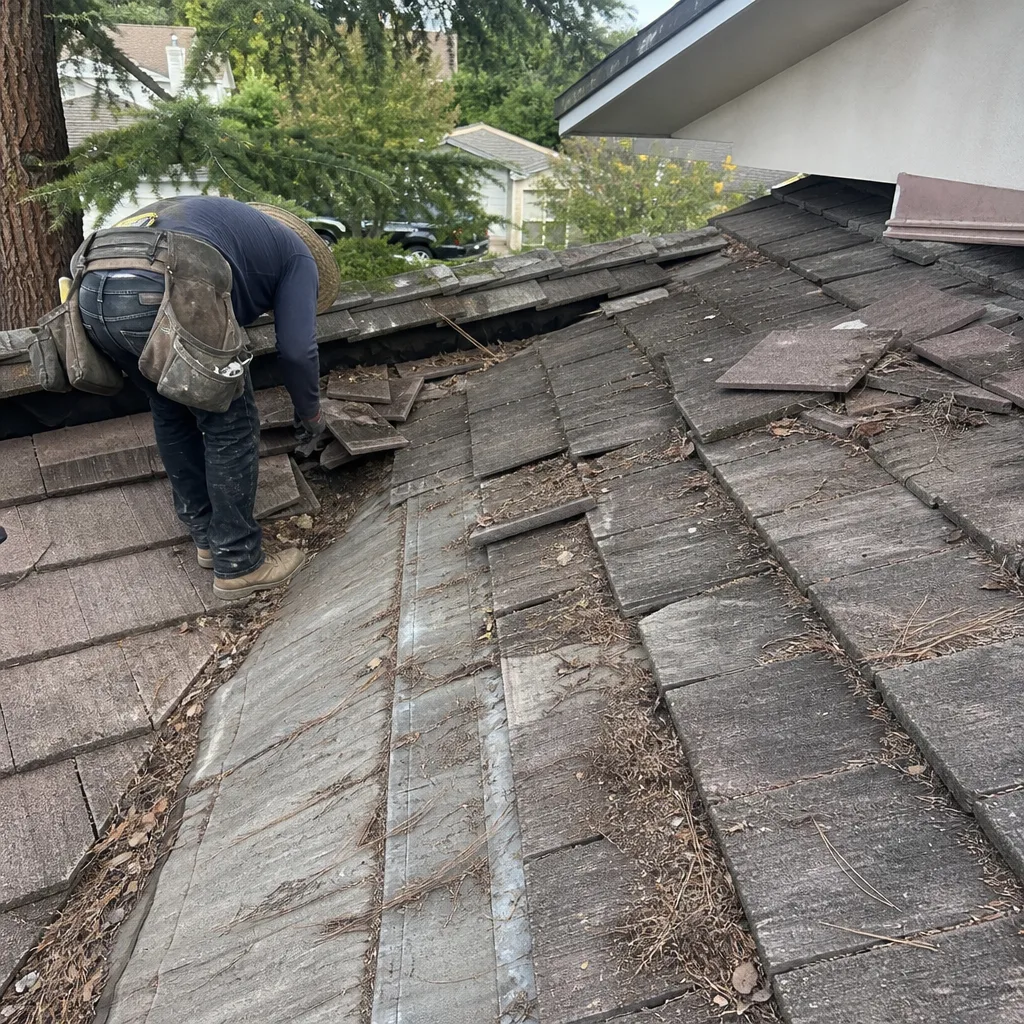 Before
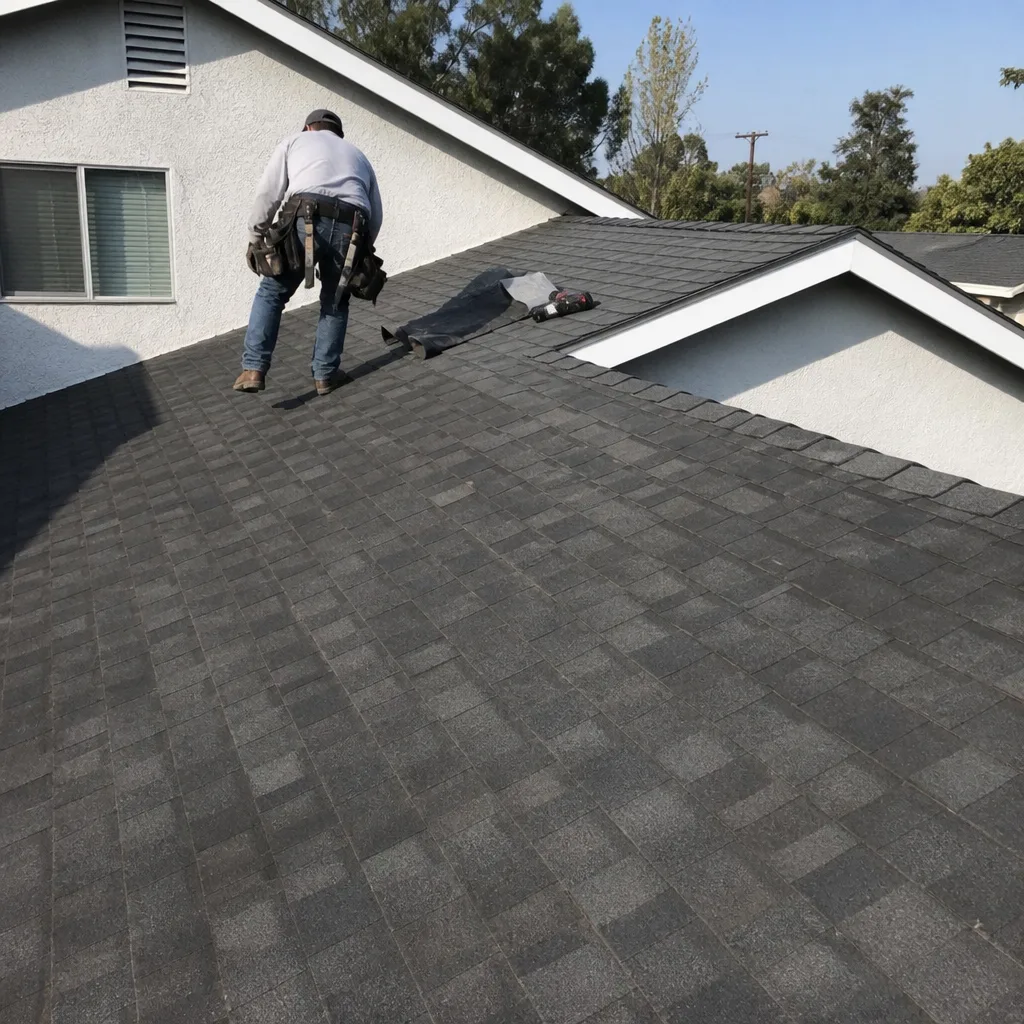 After
After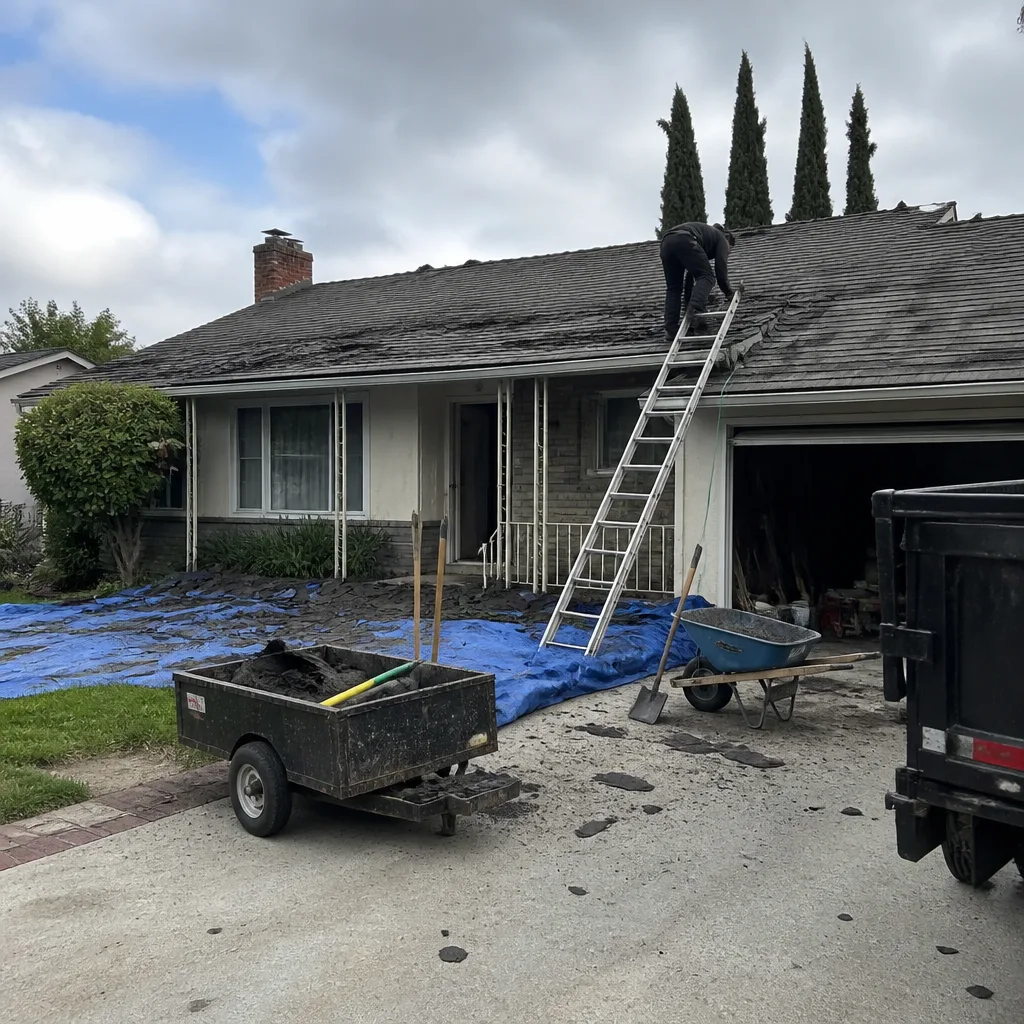 Before
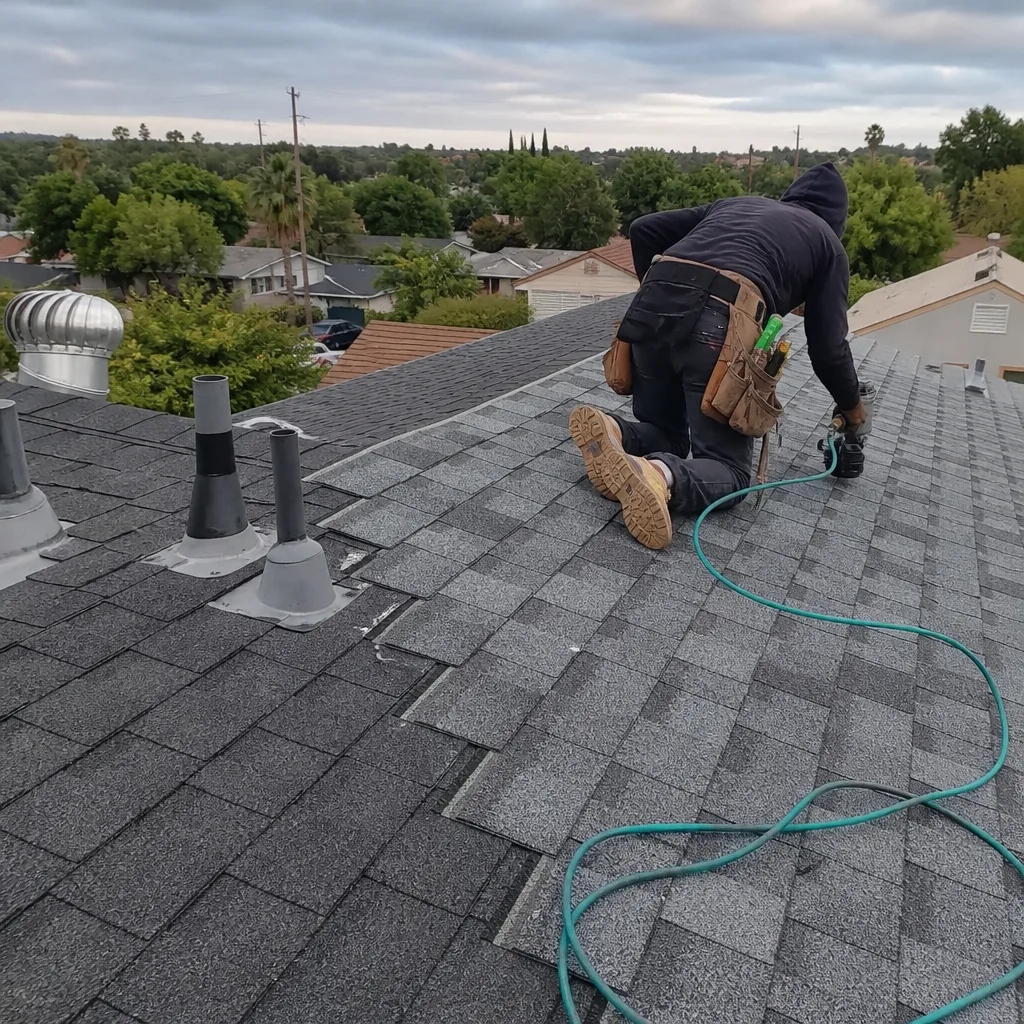 After
After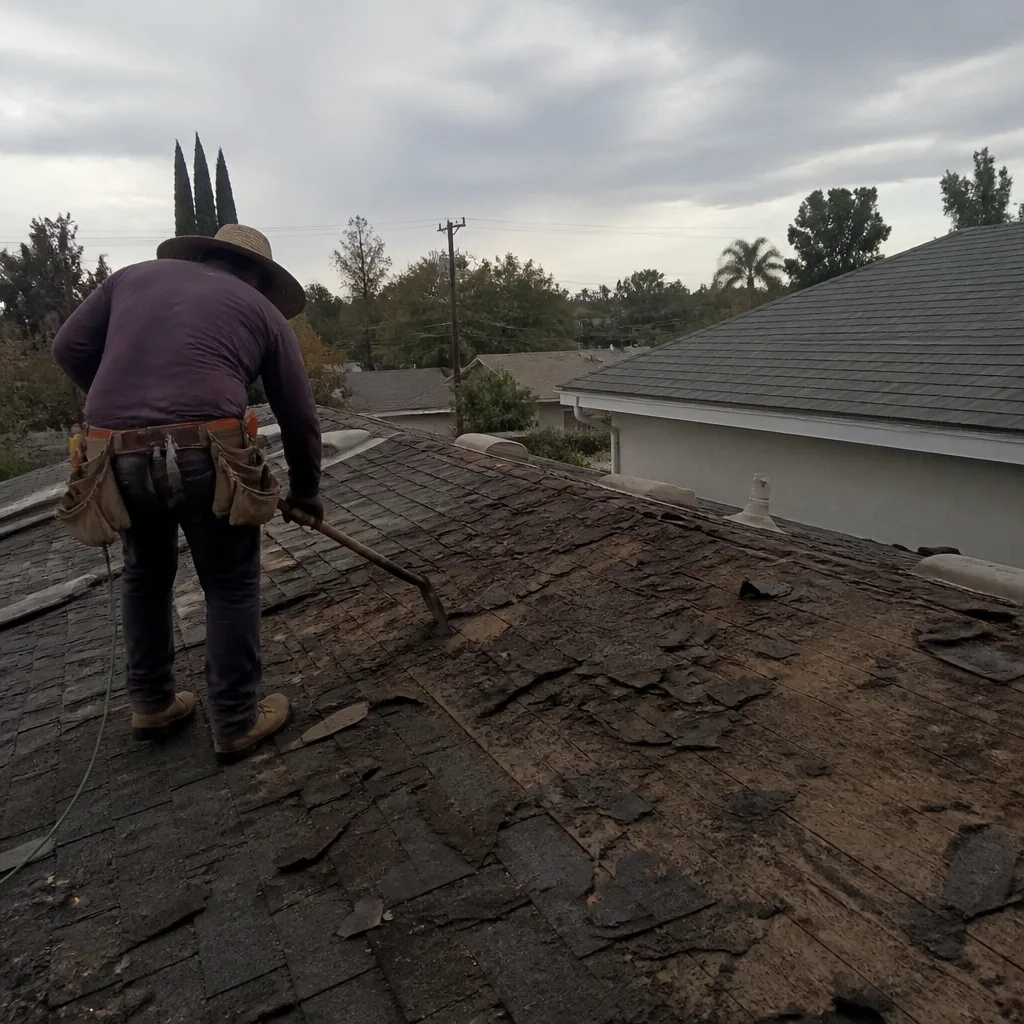 Before
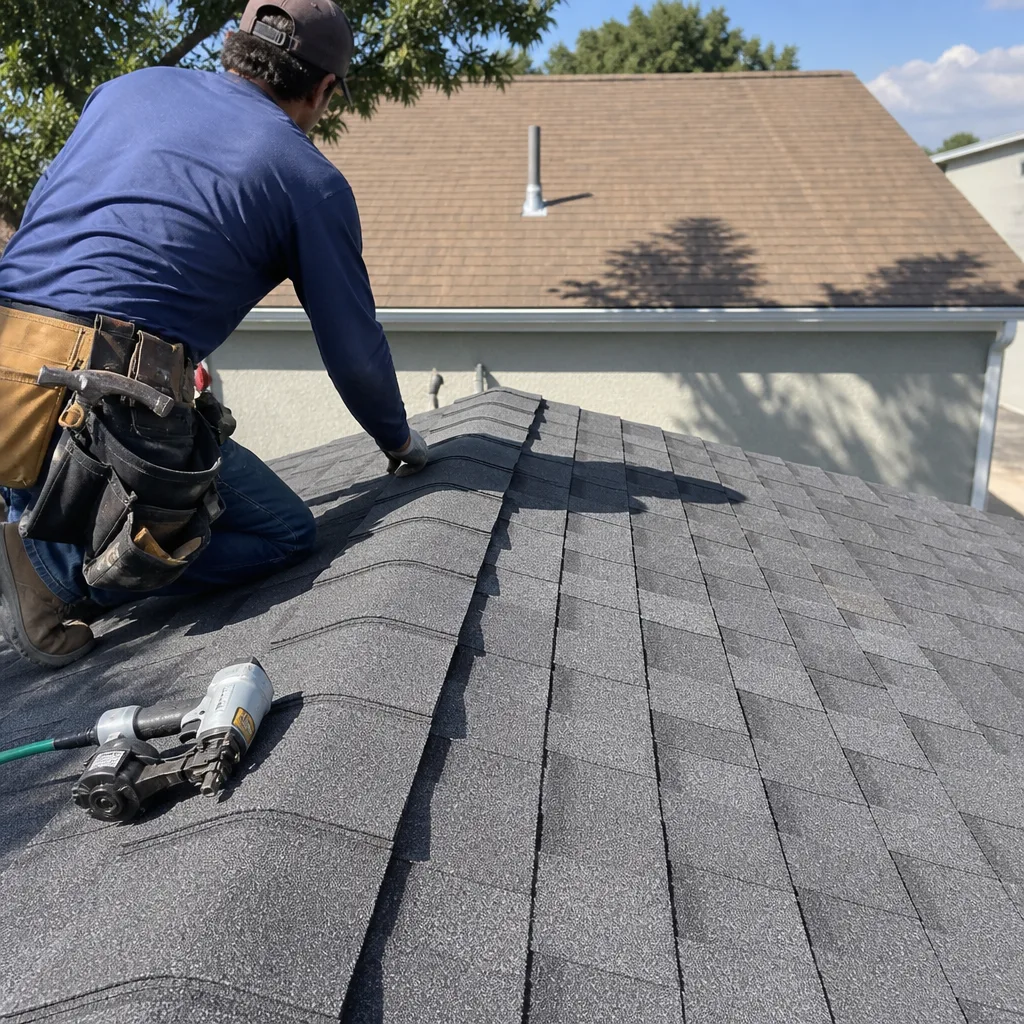 After
AfterReplacement Cost & What’s Included
Most Atlas flashing replacements in West Covina fall between $275 and $650 installed. A single pipe boot replacement runs $275 – $400. Step flashing along a wall or chimney runs $400 – $650 depending on the length of the run and roof pitch. Valley flashing replacement is the upper end, typically $550 – $650, because it’s a longer piece and requires more shingle lifting.
What drives the range: roof pitch (anything above a 6:12 means safety harnesses and slower work), how many courses of shingles need to be lifted, whether the decking underneath has rotted and needs a patch, and access. A chimney on a two-story West Covina hillside home with a steep pitch costs more than a single-story rancher in the flats near the mall. Every estimate is written before we touch the roof. The number you see is the number you pay.
Every flashing replacement includes: removal of the failed flashing, inspection of the underlying decking, new flashing matched to your existing Atlas profile, re-sealing with high-quality sealant, re-nailing lifted shingles, and a full 365-day written guarantee through the 365-Day Done Right Promise. If the repair fails within a year, we fix it free.
DIY or Call Us?
There’s a safe middle ground for the homeowner who wants to understand the problem before spending money. You can safely inspect flashing from the ground with a pair of binoculars: look for lifted edges, rust, cracked sealant, and shingle curl around roof penetrations. You can also check the attic on a rainy day with a flashlight and trace any water to its entry point. That’s useful information to have when you call us.
What you should not do is get on the roof and attempt flashing replacement yourself. Working at height on a pitched roof is dangerous enough. But the bigger problem is that flashing work is watertightness work. A small gap you didn’t seal completely, a nail you missed, a piece of step flashing that’s a half-inch too short: you won’t know until the next rain, and by then the decking is wet again. Roofs in West Covina don’t leak politely. If you’re seeing water inside, the flashing has already failed enough to cause damage. Call (831) 777-6412 and we’ll put eyes on it the same day.
FAQs
Atlas flashing installed correctly in West Covina typically lasts 15 to 20 years, but the sealant at flashing joints often needs attention at the 8 to 10 year mark. Our climate accelerates sealant degradation compared to coastal or cooler regions. The metal itself outlasts the sealant around it, which is why periodic re-sealing can extend flashing life substantially. Call (831) 777-6412 and we’ll tell you honestly whether yours needs replacement or re-sealing.
Sometimes yes, if the metal is sound and only the sealant has failed. We can clean and re-seal the flashing joints for a lower cost than full replacement. But if the metal is rusted through, bent, lifted, or the wrong profile for the shingle, repair just buys you a few months before it leaks again. We’ll show you photos of what we’re seeing before we quote either route, so you can see the condition with your own eyes.
A typical flashing replacement takes 2 to 4 hours, including the shingle re-securing and cleanup. We can complete most jobs in a single visit. If the roof decking underneath has rotted from a long-running leak, that adds time for a deck patch, and we’ll give you a photo of the rotted section before we cut anything out.
Yes. We carry Atlas-compatible flashing profiles for step, pipe, chimney, and valley applications, along with the sealants and fasteners needed for a correct install. If your roof needs a non-standard profile, we source it from a local supplier the same day. We also stock flashing compatible with GAF, Owens Corning, and CertainTeed systems, so material match is never the weak point on the repair.
Need your Atlas flashing replaced in West Covina? Call (831) 777-6412 today for a free estimate. You’ll get a written price before any work starts, before-and-after photos, and a 365-day written guarantee on the repair. As Dylan Pace says: “Every quote I write is a promise – if the number changes, you hear from me first.”
Written by Dylan Pace, Owner & Lead Roofer, Crestview Roofing Co West Covina at Crestview Roofing Co West Covina, serving West Covina and nearby areas.